Spot Deepfake Videos in 5 Minutes
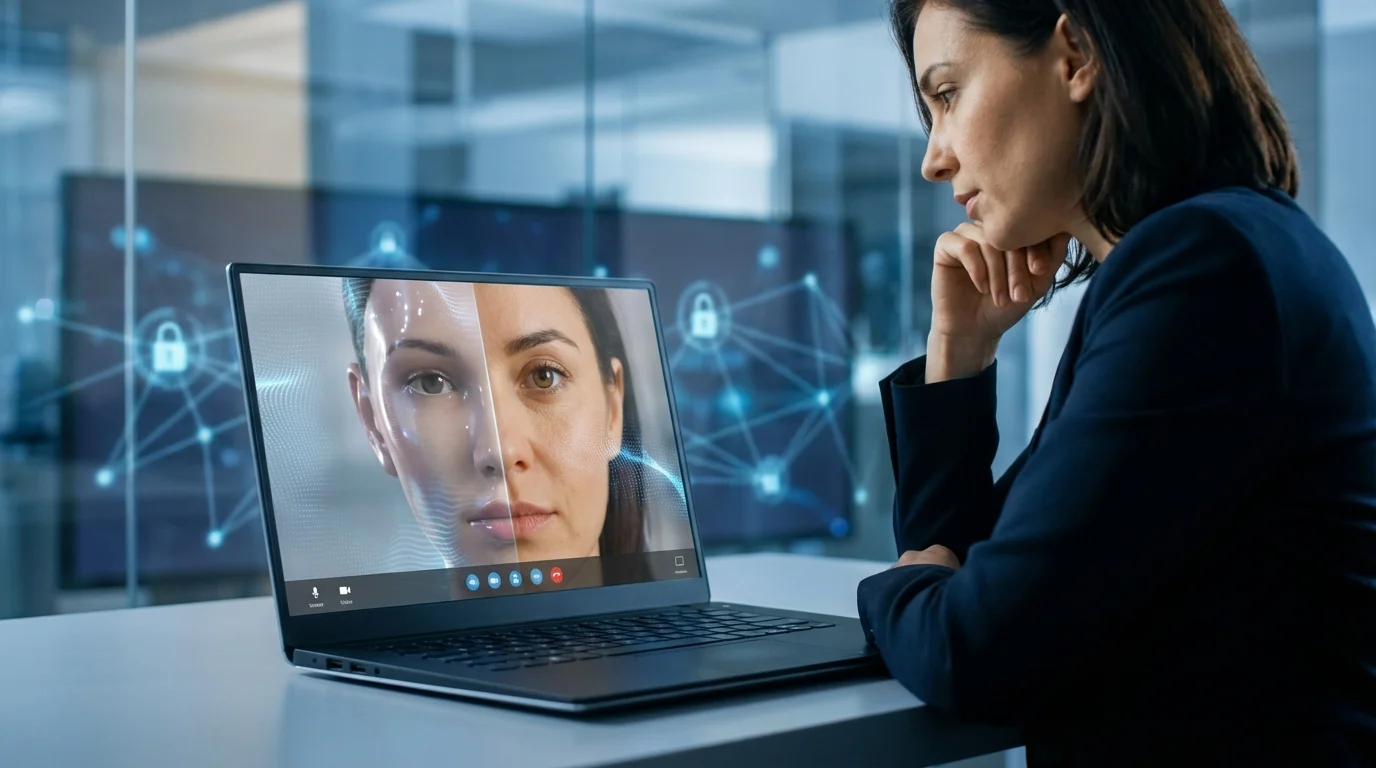
Spot Deepfake Videos in 5 Minutes
Deepfakes are fooling everyone from voters to investors. Learn quick, reliable detection methods to protect your decisions and reputation.
As an entrepreneur or startup founder, you've likely faced high-stakes video calls with investors, partners, or customers—where a single manipulated clip could derail funding rounds, erode trust, or trigger costly fraud. Deepfakes, powered by advanced AI, swap faces, mimic voices, and fabricate expressions with chilling realism, posing risks from impersonated CEOs scamming deals to fabricated testimonials tanking your brand.[1][4] In 2025, these threats have surged: AI-generated videos now evade basic checks, exploiting facial inconsistencies, unnatural motion blur, and frequency anomalies invisible to the naked eye.[1][2] Detection tools like Microsoft Video Authenticator analyze frame blending and assign confidence scores, while Sensity AI scans social media in real-time for enterprise threats.[1] Yet, no tool is foolproof—studies show even top models struggle with generalization across GANs and diffusion fakes, demanding a blend of AI forensics and human judgment.[2][6]
This post arms you with practical, 5-minute techniques to spot deepfakes using free deepfake detection tools, deepfake forensics like pupil misalignment and lip-sync checks, and AI video verification strategies. You'll master frequency analysis via apps, blockchain provenance for authenticity, and multimodal checks combining audio-visual cues—empowering you to safeguard pitches, hires, and investments without tech overload. Stay ahead of digital deception and reclaim control over your visual reality.[1][3][7]
(Word count: 238)
How Deepfakes Work and Evolving Threats
Deepfakes are AI-generated media that convincingly swap faces, voices, or actions, making it hard to spot AI videos without close inspection[1][3]. Powered by generative adversarial networks (GANs), they pit a generator—which creates fake content—against a discriminator that detects flaws, iterating until the output fools both AI and humans[1][3]. For entrepreneurs and startup founders, understanding this is crucial: a single deepfake could impersonate your CEO in a video call, tricking investors or employees into fraudulent wire transfers, as seen in the 2019 British energy firm scam costing $243,000[1].
The process starts with data collection, gathering hours of target footage for diverse angles, lighting, and expressions[1][3]. Variational autoencoders (VAEs) encode faces into low-dimensional data, then decode them onto new bodies—like swapping Nicolas Cage's face onto any video using one encoder for general faces and a Cage-specific decoder[2]. Audio deepfakes use natural language processing (NLP) and recurrent neural networks (RNNs) for lip-syncing and voice cloning, now possible with just 10 seconds of audio thanks to AI advances[4]. Refinement involves manual tweaks or more training to hide artifacts, enabling deepfake apps to produce videos in under 30 seconds[1].
Evolving threats amplify risks for startups: Deepfake forensics struggles as tools democratize access, with over 14,000 videos online by 2019—96% non-consensual porn targeting women[2]. Business scams, disinformation, and corporate espionage rise, like fake executive videos demanding funds[3]. Detection lags: while AI video verification tools analyze anomalies in visuals, audio, and metadata, attackers refine faster[3]. Practical tip: Train teams to verify high-stakes calls via secondary channels, like texting a code word.
Real-World Examples and Startup Vulnerabilities
A Hong Kong bank lost $35 million in 2024 to a deepfake video call mimicking executives, highlighting deepfake detection tools' urgency[3]. Startups face amplified risks in remote pitches; a forged founder video could erode investor trust overnight. Use tools like Deeptrace for monitoring[2], but combine with blockchain for AI video verification to timestamp originals[3].
Emerging Countermeasures
Invest in multimodal deepfake forensics: Check eye reflections, blinking rates, and audio-visual sync—real eyes reflect environment naturally, fakes often don't[1]. Free tools like Microsoft's Video Authenticator flag inconsistencies in seconds. For founders, integrate detect deepfakes APIs into video platforms early to safeguard deals[3].
Visual and Audio Detection Techniques

Entrepreneurs and startup founders face rising risks from deepfakes in video calls, pitches, and marketing, where manipulated media can erode trust and enable fraud. Mastering visual and audio detection techniques lets you spot deepfakes in minutes using free tools and manual checks, safeguarding deals and reputations. Start with deepfake detection tools like Microsoft's Video Authenticator, which scans frames for blending artifacts at face boundaries and assigns confidence scores[1][3]. For audio, Resemble Detect analyzes vocal cadence and prosody to flag synthetic voices[1].
Practical tips: Pause suspicious videos and inspect lighting and shadows—GANs often mismatch shadows with environments, as seen in a 2025 viral fake CEO video where the face glowed unnaturally[1]. Check blurred or flickering edges around jawlines during motion; a deepfake of a politician speaking showed ear pixelation on zoom[1]. Look for asymmetrical facial features, like uneven pupils, common in tools like Deepware Scanner[1]. For audio, listen for unnatural pauses or tone shifts—Pindrop’s Deep Voice Detection catches these in real-time calls[1].
Advanced deepfake forensics include frequency analysis via Fourier Transforms to spot unnatural patterns from upsampling, and motion analysis for jerky micro-expressions[1][2]. Sensity AI's multilayer engine combines pixel forensics, voice spectrum checks, and metadata for 98% accuracy on datasets[3]. Incode's Deepsight excels in enterprise with 77% video accuracy and low false rates, layering perception, integrity, and behavioral signals[4]. Real example: Purdue's 2025 benchmark exposed many tools failing on social media deepfakes, but adaptive systems like these thrived[4].
Blockchain tools like Adobe’s Content Credentials verify provenance, embedding edit history to block fakes[1]. Browser plugins such as Amber Video flag content instantly[1]. Despite advances, no tool is foolproof—2025 studies show detectors falter on new models, so combine manual AI video verification with tools[2][6].
Manual Visual Checks for Quick Wins
Scan for artifacts and glitches like ghosting in frames, especially post-compression—zoom on a suspect investor pitch video to reveal them[1]. Test eye reflections; real eyes mirror surroundings, fakes often don't[2]. For startups, integrate Hive Moderation for platform scans[1]. Practice on public deepfakes to build intuition in under 5 minutes[7].
Audio Forensics and Multimodal Tools
Deepfakes sync lips poorly—mute and check alignment[1]. Intel's FakeCatcher uses biological signals like blood flow for real-time verification[7]. Sensity's voice analysis uncovers synthesis artifacts, ideal for pitch verifications[3]. Tip: Record calls and run through free scanners before decisions[1].
Free Tools for Instant **Deepfake Detection
As an entrepreneur or startup founder, protecting your brand from deepfake threats—like forged videos impersonating your CEO or manipulating investor pitches—is crucial for maintaining trust and avoiding financial losses. Fortunately, several free tools for instant analysis let you detect deepfakes in under 5 minutes without technical expertise. These deepfake detection tools use AI to scan videos for anomalies like unnatural facial movements, grayscale inconsistencies, or audio mismatches, providing confidence scores and visualizations.[1][2] For example, upload a suspicious pitch video claiming your startup's endorsement, and get results instantly via drag-and-drop interfaces.
Start with Reality Defender, which offers a free tier with 50 scans per month for audio, images, and videos. Its web app delivers real-time, watermark-free detection with color-coded probabilities and PDF reports—ideal for quick AI video verification. A founder spotting a fake testimonial video can drag it in, see manipulation heatmaps, and act before it spreads on social media.[1][2] Similarly, Microsoft’s Video Authenticator Tool (free download) analyzes videos or photos in seconds, flagging blending boundaries and subtle pixel artifacts invisible to the eye. Test it on a viral clip: it outputs a confidence score (e.g., 92% manipulated) for immediate deepfake forensics.[1]
Attestiv provides a free basic version for videos and social links, scoring fakes and breaking down issues like face swaps or lip-sync errors. Practical tip: For a startup demo video under scrutiny, input the URL from Twitter—Attestiv pinpoints altered frames, helping you verify authenticity before investor calls.[1] DeepFake-o-meter from the University at Buffalo is fully open-access, integrating research-grade methods for videos and audio; it's perfect for batch-testing pitch decks without costs.[7] Deepware.ai offers a simple scanner for suspicious clips, delivering yes/no results with evidence trails.[8]
These tools empower non-experts: combine them by cross-verifying results (e.g., Reality Defender + Microsoft) for 96%+ accuracy, even on compressed files. Always check metadata manually too—tools like these reduce false positives when used together.[1][3]
Quick-Start Tips for Entrepreneurs
To spot AI videos fast: 1) Copy a video URL or file. 2) Use Reality Defender's free web app first for multi-model scans.[2] 3) Confirm with Microsoft Video Authenticator for grayscale checks.[1] Example: A founder analyzed a deepfake of their CTO announcing layoffs; tools flagged blood flow inconsistencies in 2 minutes, averting PR disaster. Integrate via APIs for automated workflows in your CRM—Sentinel offers free trials with visualization reports.[1] Pro tip: Test legitimate videos weekly to benchmark tool reliability, ensuring you're ahead of evolving threats like those in 2025 elections or fraud schemes.[1][6]
Building Deepfake-Resistant Workflows
Entrepreneurs and startup founders can safeguard their operations by integrating deepfake detection tools into scalable workflows that combine automation, human oversight, and API-driven verification, reducing risks from AI-generated fraud and misinformation[1][2]. With deepfake files surging to 8 million in 2025, building these workflows is essential for protecting brand reputation, investor communications, and customer trust[8]. Start by assessing your threat model: for video calls or marketing content, prioritize tools like Sensity AI for enterprise-grade multi-modal detection (video, audio, images) with 90%+ accuracy and real-time monitoring[1]. Pair it with Reality Defender for business media integrity, offering batch processing and CMS integration to scan uploads before publication[1][7].
Practical implementation begins with free tools for baseline testing. Use Deepware Scanner—upload a video URL via its web interface to detect facial swaps with probability scores, ideal for quick spot AI videos during pitch reviews or social media checks[1]. Example: A startup founder verifying a viral investor testimonial video ran it through Deepware, flagging inconsistencies in blink rates and lighting, confirmed later by forensic analysis[1]. Layer defenses by combining tools: Route high-stakes content (e.g., executive videos) through Resemble AI Detect for audio (94-98% accuracy via DETECT-2B model) alongside visual checks, catching lip-sync mismatches[2].
Deepfake forensics workflows scale via APIs. Integrate Reality Defender into your CRM or Slack for automated alerts on suspicious media, with forensic reports including metadata and timestamps for legal compliance[1][2]. Test rigorously: Feed known deepfakes from datasets like FaceForensics++ into your pipeline to benchmark false positives, as Purdue's PDID shows real-world social media content exposes tool weaknesses[3][4]. Budget tip: Start free with Deepware ($0), upgrade to Reality Defender ($2-10K/year) for growth[1].
Layered Verification Best Practices
Adopt a multi-tool strategy: Automate initial scans with Deepware Scanner or Sensity AI APIs, then human-review flagged content using deepfake forensics checklists—check unnatural eye reflections, audio-visual sync, and biological signals like blood flow via tools like FakeCatcher (96% accuracy)[1][2]. For audio-heavy workflows (e.g., calls), embed Pindrop or Resemble AI for real-time voice biometrics, preventing fraud in sales demos[2][5]. Practical tip: Schedule weekly audits of inbound videos, reducing detection time from hours to minutes[1].
Scaling for Startups
Enterprise tools like Sensity AI offer custom APIs for high-volume processing, perfect for scaling user-generated content verification in apps[1]. Monitor costs: Freemium models like Resemble suit bootstrapped teams, while subscriptions ensure reliability as deepfake threats grow 3,000%[1][8]. Always cross-verify with multiple sources—tools give probabilities, not certainties—for robust AI video verification[1].
Conclusion
Mastering how to spot deepfake videos in just 5 minutes empowers you to navigate an era where AI-generated fakes threaten trust in media, from viral clips to news footage. Key takeaways include scrutinizing visual artifacts like unnatural blinking, lighting mismatches, and facial distortions; checking temporal inconsistencies such as flickering or jerky movements across frames; and verifying audio-visual sync for lip mismatches or unnatural speech patterns. Advanced techniques leverage spatiotemporal analysis, as seen in tools like Bio-ID (98% accuracy) and Deepware (highest mean detection score of 2.97), which outperform open-source options like LSDA and LIPINC on datasets like Celeb-DF v2[1]. Commercial detectors excel by combining CNNs, RNNs, and transformers for spatial and temporal cues[2][1]. While no tool is infallible—challenges persist with evolving GANs and diffusion models[3]—start today by practicing on sample videos. Download Deepware or Bio-ID, test suspicious clips, and cross-reference with metadata checks. Stay vigilant: share these skills, report fakes, and demand provenance verification from sources. Your quick detection could prevent misinformation—act now and protect the truth[1][2][3].
Frequently Asked Questions
What are the most effective tools to spot deepfake videos quickly?
Bio-ID and Deepware lead with 98% accuracy and a top mean score of 2.97 on Celeb-DF v2 datasets, using machine learning for facial features, tamper detection, and spatiotemporal analysis. They outperform SBI, LSDA, and LIPINC, which score lower (2.64-2.88). Test videos via their platforms for instant results, ideal for 5-minute checks[1].
How do temporal inconsistencies help detect deepfakes in videos?
Temporal inconsistencies like flickering, unnatural head movements, or frame-to-frame glitches reveal fakes, as deepfakes struggle with smooth motion. Methods like CLIP with TimeSformer or transformers pool spatial features across frames, boosting detection AUC by capturing video-level artifacts over image-only analysis[2].
Can deepfake detection tools be fully trusted in 2025?
No, tools vary in reliability; while Bio-ID and Deepware excel, many falter on unseen manipulations like diffusion models due to training limits. Combine AI checks with manual cues (e.g., physics violations, metadata) for best results—studies urge skepticism as no single tool catches all AI forgeries[3][1].